Introduction:
The emergence of autonomous vehicles represents a revolutionary shift in the automotive industry, promising to reshape the way we travel, work, and live. Self-driving cars, equipped with advanced sensors, artificial intelligence, and cutting-edge computing power, have the potential to make roads safer, reduce traffic congestion, and provide greater mobility for people of all ages and abilities. In this article, we’ll explore the rise of autonomous vehicles, the technology behind them, and the implications for the future of transportation.
Understanding Autonomous Vehicles:
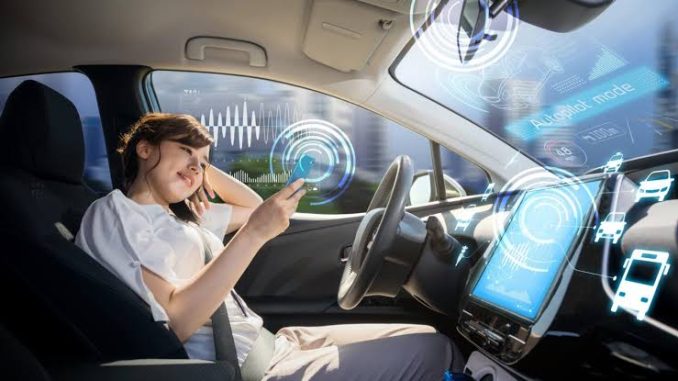
Autonomous vehicles, also known as self-driving cars or driverless cars, are vehicles capable of navigating and operating without human intervention. These vehicles use a combination of sensors, cameras, radar, lidar, and onboard computers to perceive their surroundings, interpret traffic conditions, and make real-time decisions about steering, acceleration, and braking. Autonomous vehicles rely on sophisticated algorithms and artificial intelligence to analyze sensor data, predict future scenarios, and navigate safely through complex environments, such as city streets, highways, and rural roads.
Levels of Autonomy:
The Society of Automotive Engineers (SAE) has established a classification system for autonomous vehicles, known as the levels of autonomy, which range from Level 0 (no automation) to Level 5 (full automation). At Level 0, the driver is fully responsible for controlling the vehicle at all times, while at Level 5, the vehicle is capable of operating autonomously in all driving conditions without any human intervention. Most current autonomous vehicles are classified as Level 2 or Level 3, meaning they can perform certain driving tasks autonomously but still require human supervision and intervention in certain situations.
Technology Behind Autonomous Vehicles:
Autonomous vehicles rely on a variety of technologies to perceive their surroundings, make decisions, and navigate safely. One of the key technologies used in autonomous vehicles is lidar (light detection and ranging), which uses laser beams to create detailed 3D maps of the vehicle’s surroundings. Lidar sensors provide high-resolution data about the shape, distance, and movement of objects, allowing autonomous vehicles to detect obstacles, pedestrians, and other vehicles with precision.
In addition to lidar, autonomous vehicles also use radar, cameras, and ultrasonic sensors to gather information about their environment. Radar sensors detect objects at longer distances and in adverse weather conditions, while cameras provide visual information about road signs, traffic lights, and lane markings. Ultrasonic sensors are used for close-range detection and parking assistance, providing additional information about nearby objects and obstacles.
Artificial intelligence (AI) plays a crucial role in autonomous vehicles, enabling them to interpret sensor data, recognize patterns, and make decisions in real-time. AI algorithms process vast amounts of sensor data to identify objects, predict their movements, and plan safe and efficient driving trajectories. By continuously learning from their experiences and interactions with the environment, autonomous vehicles can improve their driving skills over time and adapt to changing conditions on the road.
Benefits of Autonomous Vehicles:
Autonomous vehicles offer a wide range of potential benefits, both for individuals and society as a whole. One of the most significant benefits is improved safety, as autonomous vehicles have the potential to reduce the number of accidents caused by human error, such as distracted driving, speeding, and drunk driving. By eliminating the risk of human error, autonomous vehicles could save thousands of lives each year and prevent countless injuries on the road.
In addition to safety, autonomous vehicles also offer potential benefits in terms of mobility, accessibility, and convenience. For individuals who are unable to drive due to age, disability, or other reasons, autonomous vehicles provide a new level of independence and freedom, allowing them to travel independently without relying on friends, family, or public transportation. Autonomous vehicles could also reduce traffic congestion and pollution by optimizing traffic flow, reducing the need for parking spaces, and promoting shared mobility services, such as ride-hailing and car-sharing.
Challenges and Considerations:
Despite the potential benefits, autonomous vehicles also present several challenges and considerations that need to be addressed before they can become widely adopted. One of the primary concerns is safety, as autonomous vehicles must demonstrate a level of reliability and performance that meets or exceeds the safety standards of human drivers. Ensuring the safety of autonomous vehicles requires rigorous testing, validation, and regulation to address potential risks and vulnerabilities in the technology.
Another challenge is regulatory and legal frameworks, as the deployment of autonomous vehicles raises complex legal and ethical questions related to liability, insurance, and accountability in the event of accidents or malfunctions. Governments and regulatory agencies must establish clear guidelines and standards for the testing, operation, and deployment of autonomous vehicles to ensure public safety and confidence in the technology.
Conclusion:
The rise of autonomous vehicles represents a transformative shift in the way we think about transportation, offering the potential to revolutionize mobility, improve safety, and enhance the quality of life for people around the world. While there are still challenges and considerations to overcome, the rapid advancement of technology and ongoing research and development efforts are bringing us closer to a future where self-driving cars are a common sight on our roads. As autonomous vehicles continue to evolve and mature, they have the potential to reshape our cities, our communities, and our lives in ways we can only begin to imagine.